Freezing Weather!
As a full-time RVer nothing, except a roof leak, scares me more than a deep, hard freeze! Even though our RV is considered a "4-seasons", it is still very drafty when the freezing weather hits and it's not perfectly prepared for deep freezes. Having a water line break not only causes problems with repair, but can also do a lot of water damage before being found!
Since we are camping all day, every day, we are reliant to a good degree on the water supply and electric supply from the campground. We have tanks we can keep full to get through some durations of water outages and decent size batteries to get through short power outages, even so, prolonged sub-freezing temperatures present a significant problem.
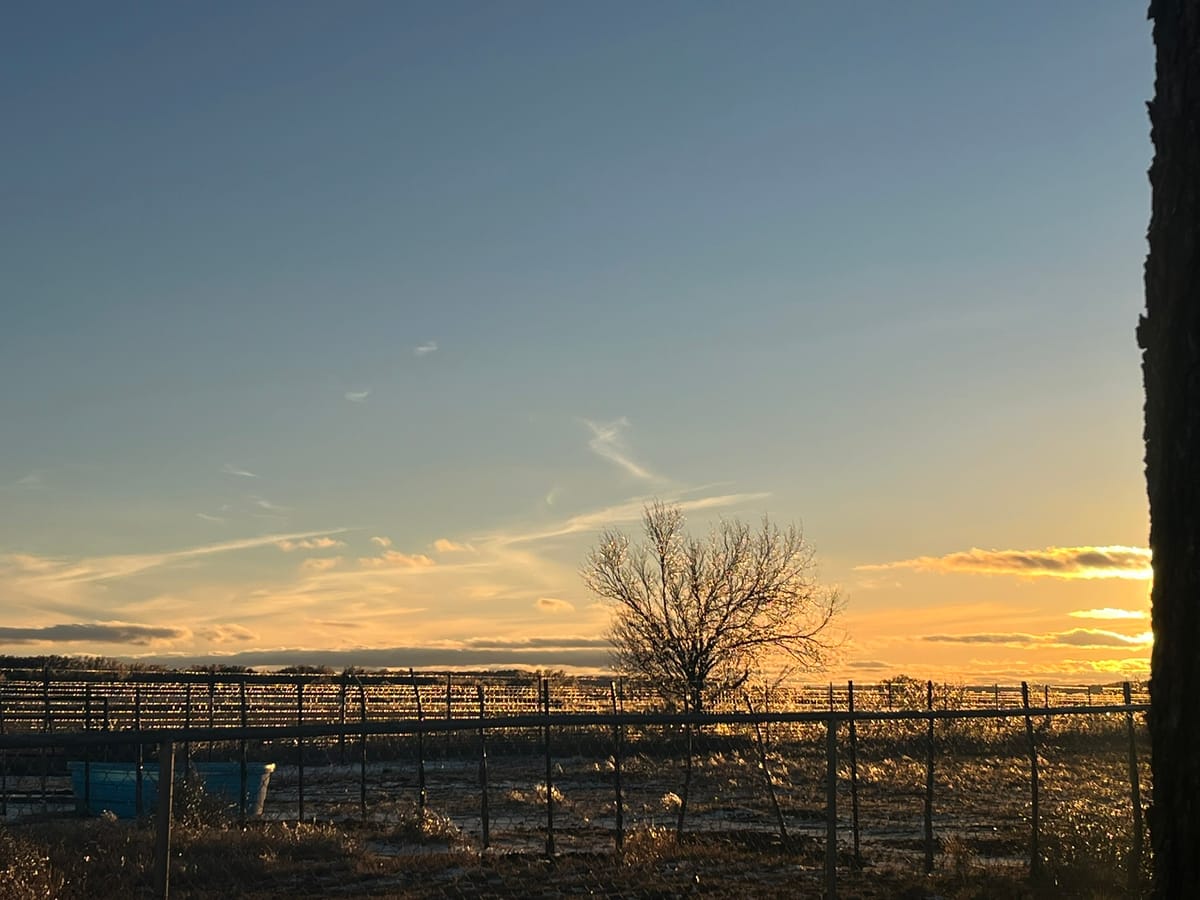
This latest freezing weather swept well into south Texas where we are camping driving temperatures into the mid to upper teens. Even the high temperatures were forecast to be just above freezing or slightly below freezing for three days and the campground made the decision to shut off water to the campsites for the duration. They provided plenty of warning to all campers and we took heed and filled our water tank accordingly. We also cleaned out our black water and put a small amount of water in our gray tanks so that we could run our tank warmers. They will burn themselves out if there is no water in the tanks. We also disconnected all our water hoses, the filter and water softener and drained them all so they wouldn't freeze and break and topped off our propane tanks to be sure we wouldn't run out. The coach heater can chew up a tank of propane in 4-5 days when it's very cold and it runs all day.
We have seen weather down in the mid-20's before and had put some extra insulation around the water pipes for the kitchen which include the low point drains and the fresh water tank line that also passes right along the same path. Our rig has a heated basement that protects almost all the water lines BUT the fresh water line from the tank and the hot and cold line for the kitchen sink passes out the bottom of the basement, along the bottom of the RV and up into the kitchen island. These had frozen up before on us, prompting the extra pipe insulation which did well for us for the duration of last winter.
On the first night of bitter cold this year, both our kitchen lines froze and we had no water in our kitchen come morning. Our pump still worked to provide water for the bathroom so the fresh water line from the tank was clear. In the morning, I had to pull down the insulation from the low point drains and open the little flap we had made to insulate the area and ran a hair dryer for a few minutes into the cavity. I only did this for about 15 minutes due to the bitter cold but it turned out to be enough. The PEX lines must not have been severely frozen.
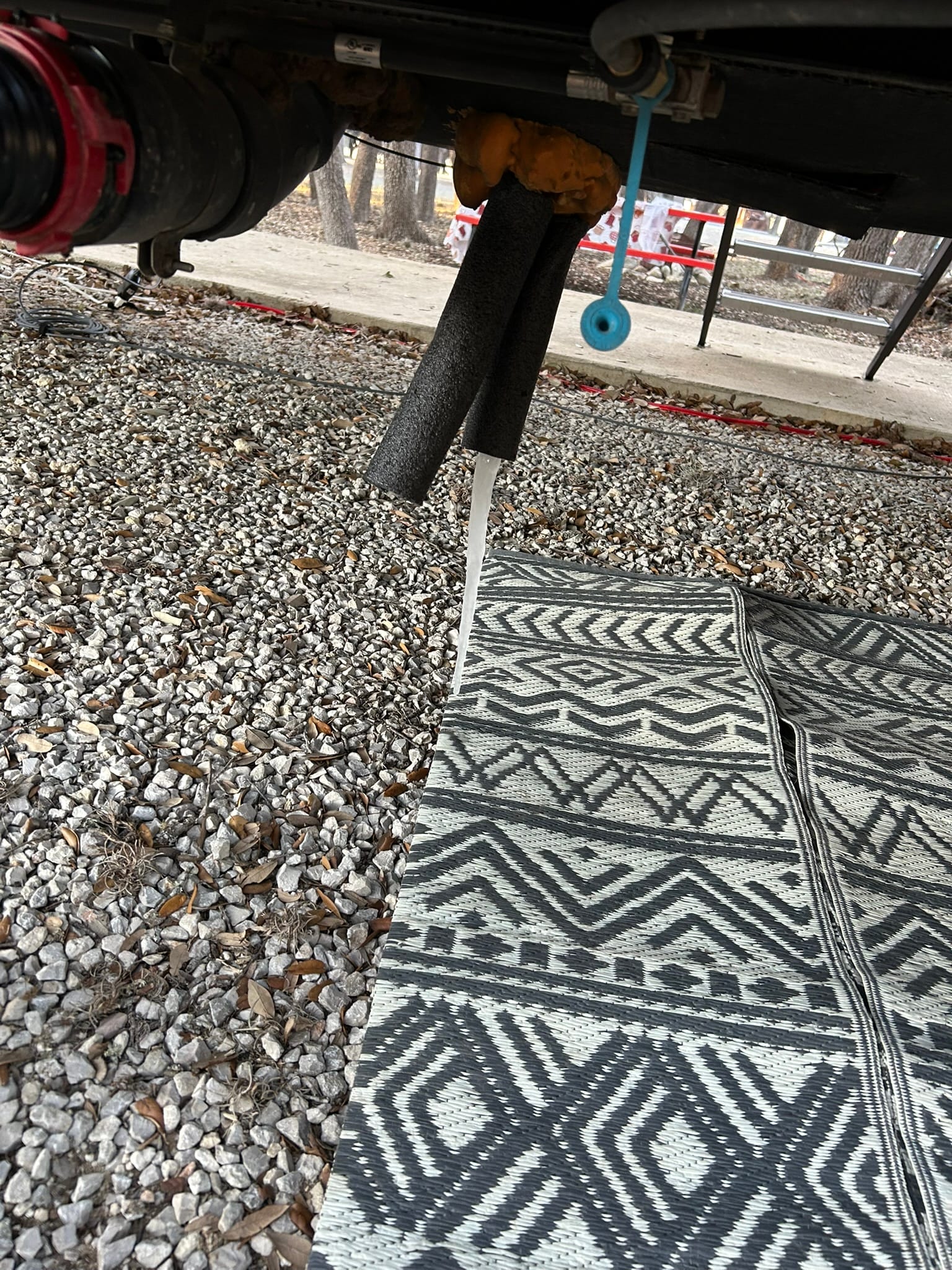
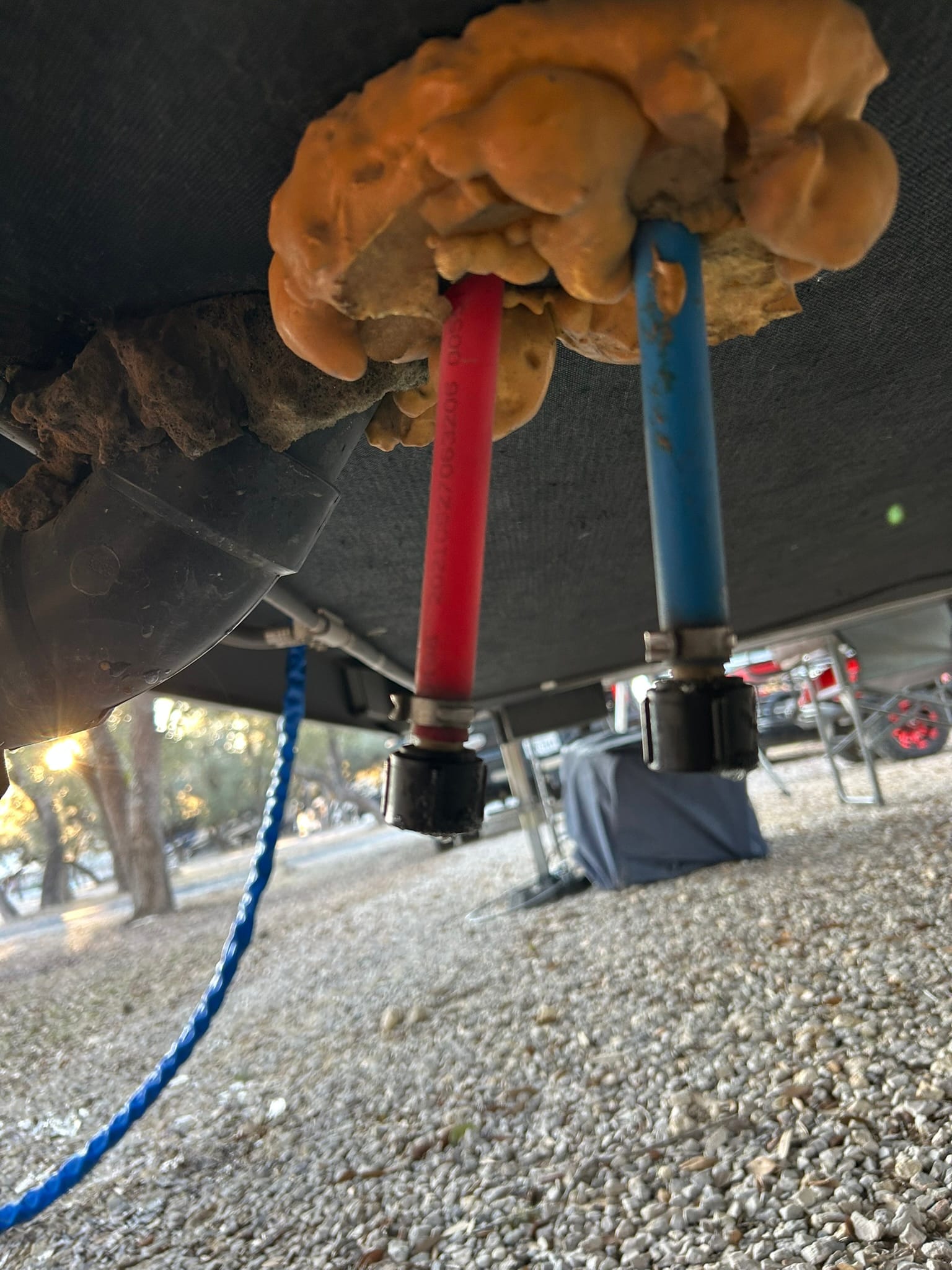
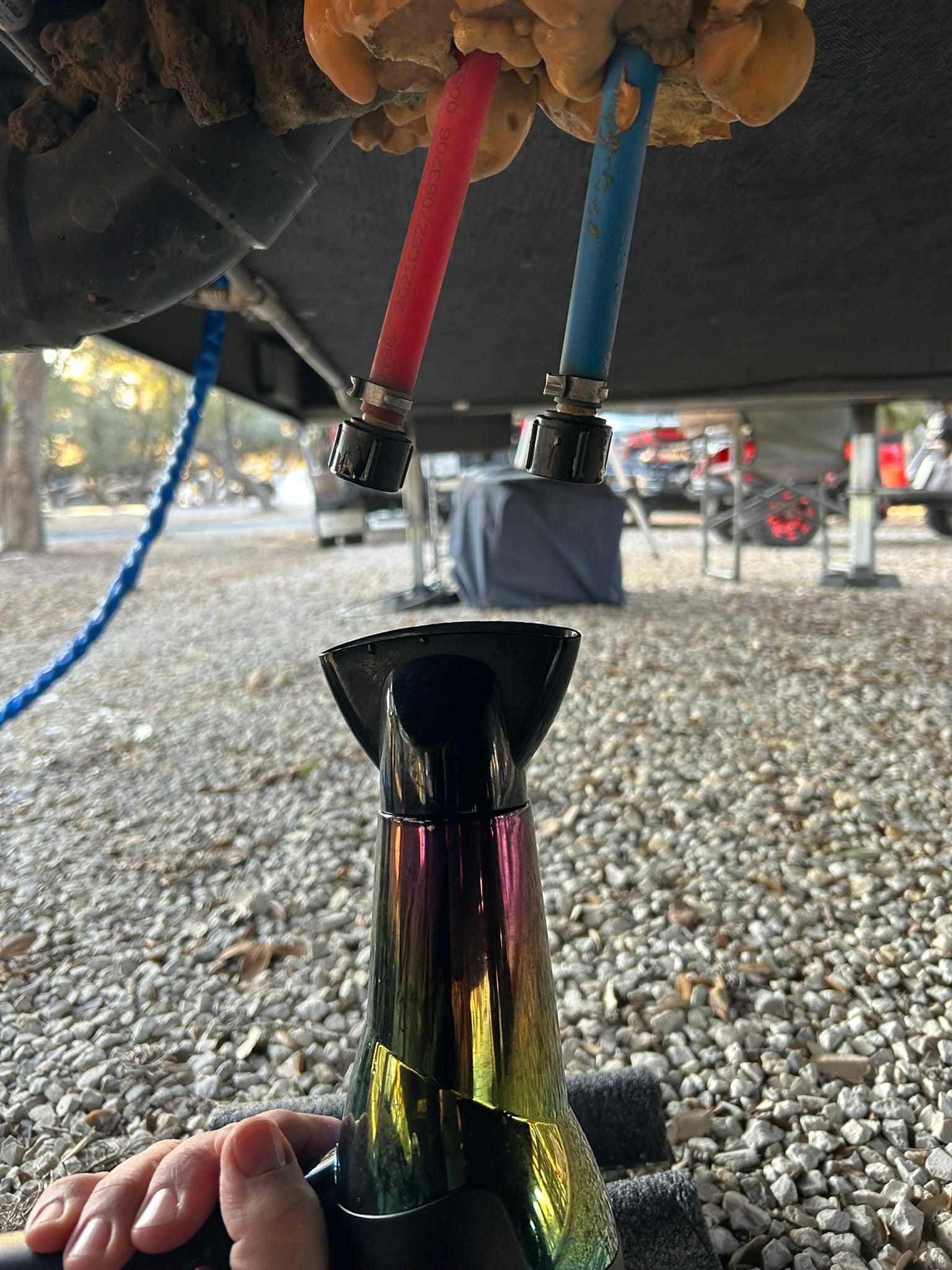
Unfreezing the water lines
The second night I decided to pull the plugs from the low point drains in hopes of draining enough water out to prevent freezing but woke up to no water anywhere in the RV! The pump would run, so wasn't frozen itself, but the fresh water line was frozen and it couldn't pull any water forward. When I went to check on the lines, I found an icicle hanging out of the cold water drain and again used a hair dryer to try to open the lines. I was able to get enough ice out of the low point drains to put the plugs in but when I turned the pump on, we still had no water so the fresh water line had frozen also.
That morning as the day warmed, the campground turned the water back on so I connected us to the water supply and we had water in the bathroom for showers and washing up. The kitchen took another hour to defrost but opened on its own as did the fresh water line from the tank. Subsequent nights were only down to the mid to upper 20's and we didn't lose water again, though I still disconnected from the campground supply to keep from having any issues. Come morning, I simply reconnected to the campground water supply in the morning so we could stop using our pump and tank.
Clearly, our earlier efforts to insulate our water lines is not sufficient to handle deeper freezes like this one. We have a lot of other campers in the park many of whom experienced similar issues of one kind or another from cracked fittings to frozen lines. The campground itself, also had lines freeze even with the water turned off.
I've seen a lot of articles and videos and talked with other campers about how they "survive" the freezing weather and have identified the following options:
First, many full-time RVers will put skirting around the bottom of the RV to help keep the bitter air from getting under the rig. You can also add a heater or heat lamp to keep the temperature under there just above freezing. You only need a few degrees warmer to prevent freezing up! This is a good solution for those who come south for the whole winter or are very stationary. Sadly, my wife and I move a lot and setting up that sort of "semi-permanent" structure is costly and not very portable! But, it is certainly a good option if we plan to remain in a cold location for a significant time!
Second, we can winterize the rig before a freeze and put antifreeze in all the lines. This is the standard for rigs not in use, but for full-timers it is a pain since you lose even the water you could have had in your tanks and are then completely dependent on whatever facilities the campground may or may not have for showering, washing dishes, etc. In addition, you have all the work required to winterize and then rinse the lines once it warms up! And, would you do that daily?
Third, we can figure out a way to get better insulation around the pipes along the bottom of the rig. We may have to pull the Coroplast bottom down some and see if we can slip additional insulation between the Coroplast and the pipes lying right on top of it. Maybe preventing the contact will give us a few more degrees of protection. I think the problem is right around the area where the low point drains exit the Coroplast bottom so we could maybe surround that smaller area with a cover of some sort.
Finally, we can look at inserting a heating blanket or using heat tape in the area around the pipes optimally, but at least on top of them to keep the temperature just above freezing in that area. I can figure out a way to have the power cord extend beyond the Coroplast so I can plug it in when needed. The downside of course is that now we have a heating element operating in an area we can't easily see and I worry about the potential for a fire with this method. I do think, though, that this is a very good permanent solution that would handle just about any cold we throw at it. Definitely, a solution that needs a bit more research.
Let us know your thoughts on how you keep your pipes from freezing!