Some Thoughts on Full-Timing - Solar
This is the fifth article in a series on full-timing and we'll be discussing solar upgrades. If you missed any of the previous 4 previous ones you can catch up here: https://www.braysaway.com/
While I call this "solar" it would be better called "power storage and generation". Adding solar panels and more lithium batteries to your RV can come in many forms from a simple panel to top off your batteries for a few hundred dollars to a comprehensive system that allows you to live off the grid indefinitely - power wise! You can go hog wild with solar upgrades and I've had a salesman tell me "we can do a minimal install for $20K"! that's minimal?? Yikes! That's outside our budget by a long shot and not really practical for us because it doesn't fit our camping style.
Our style of camping is mostly full-hookup campgrounds with a few Harvest Host or boondocking nights. Usually, we don't go more than 1 or 2 nights without electric hookups. We are looking at an Alaska trip that will require 3-4 nights without hookups.
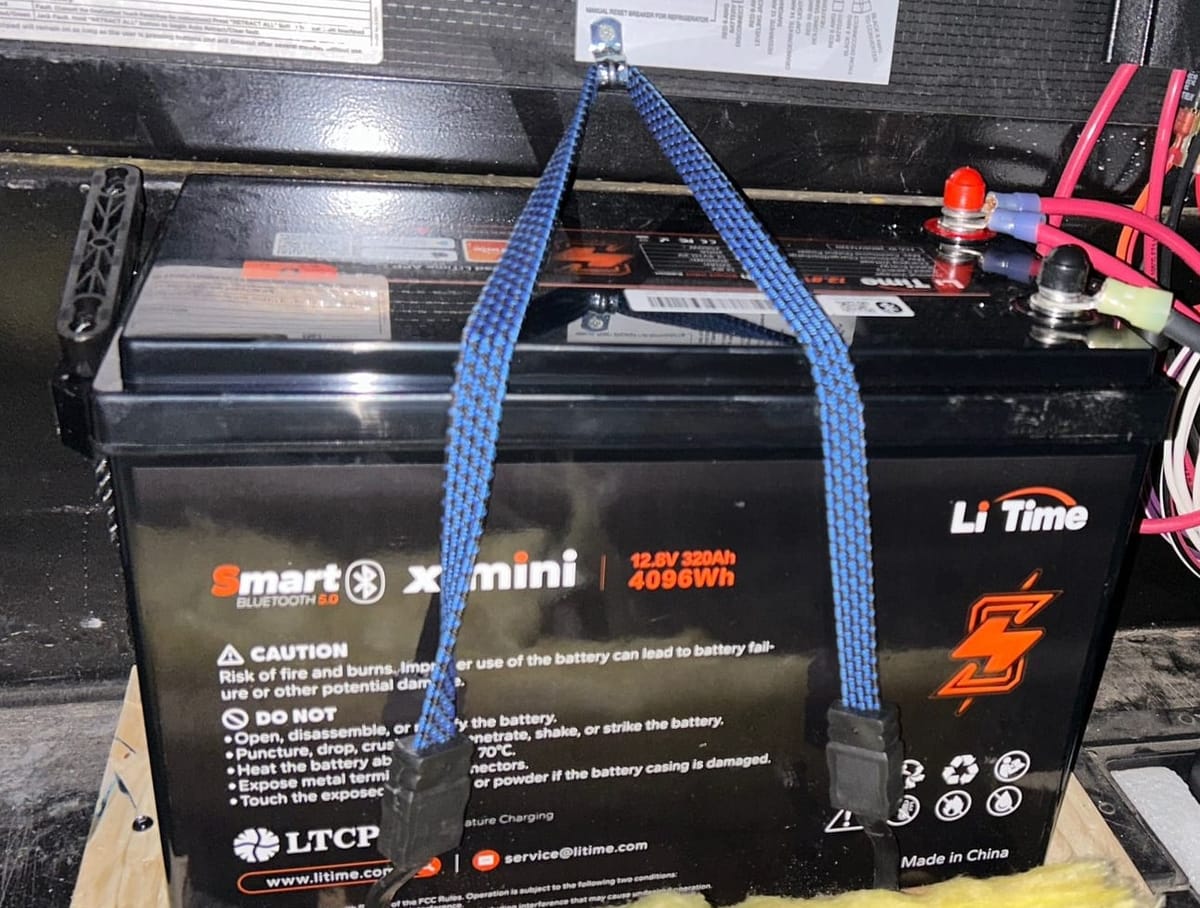
Given the above, we need to have enough battery storage and recharging ability to last 3-4 days. We upgraded our original lead acid battery to a small 100AH Lithium battery when we discovered that the lead-acid battery wouldn't even last one full night at a Harvest Host given our 12V refrigerator's load. That new battery will last the night but is down to 20-24% by morning and wouldn't last a second night. We then upgraded again to a 320AH battery effectively tripling our storage capacity from the last lithium and 5X from the original lead-acid battery. We hope that will be enough storage for our projected stays.
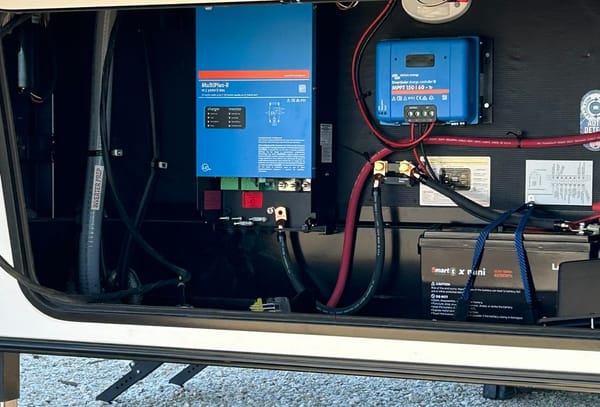
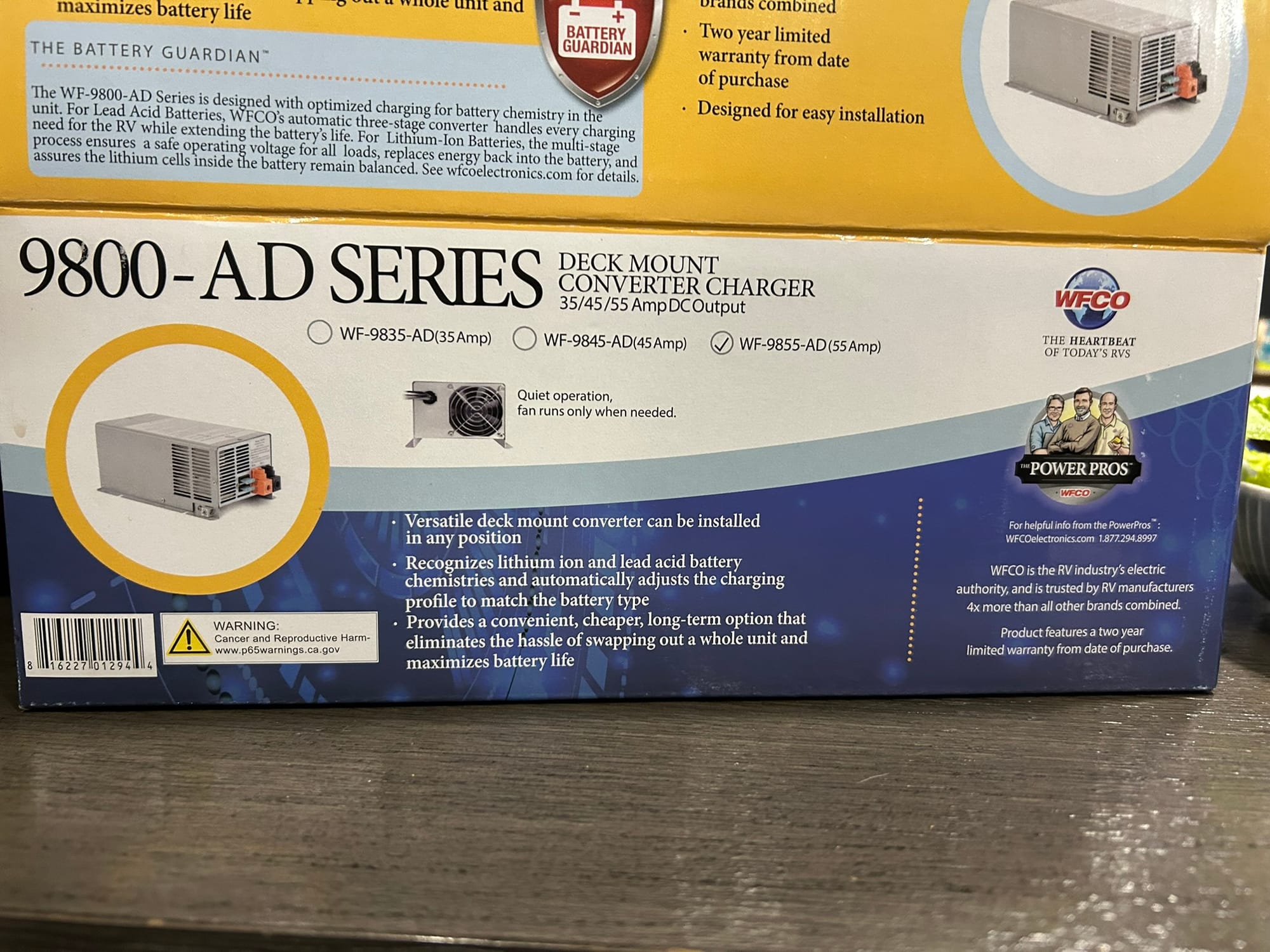
The upgrade from lead-acid to lithium was fairly straight forward. Disconnect power and the battery terminals and reconnect to the new battery. The only complicating factor was that our existing power converter was not lithium compatible. Lithium batteries need a slightly higher voltage supplied to charge to full capacity. I had to purchase a new power converter and install it in our RV. I also had to ensure that the solar charge controller we have was lithium capable which it was.
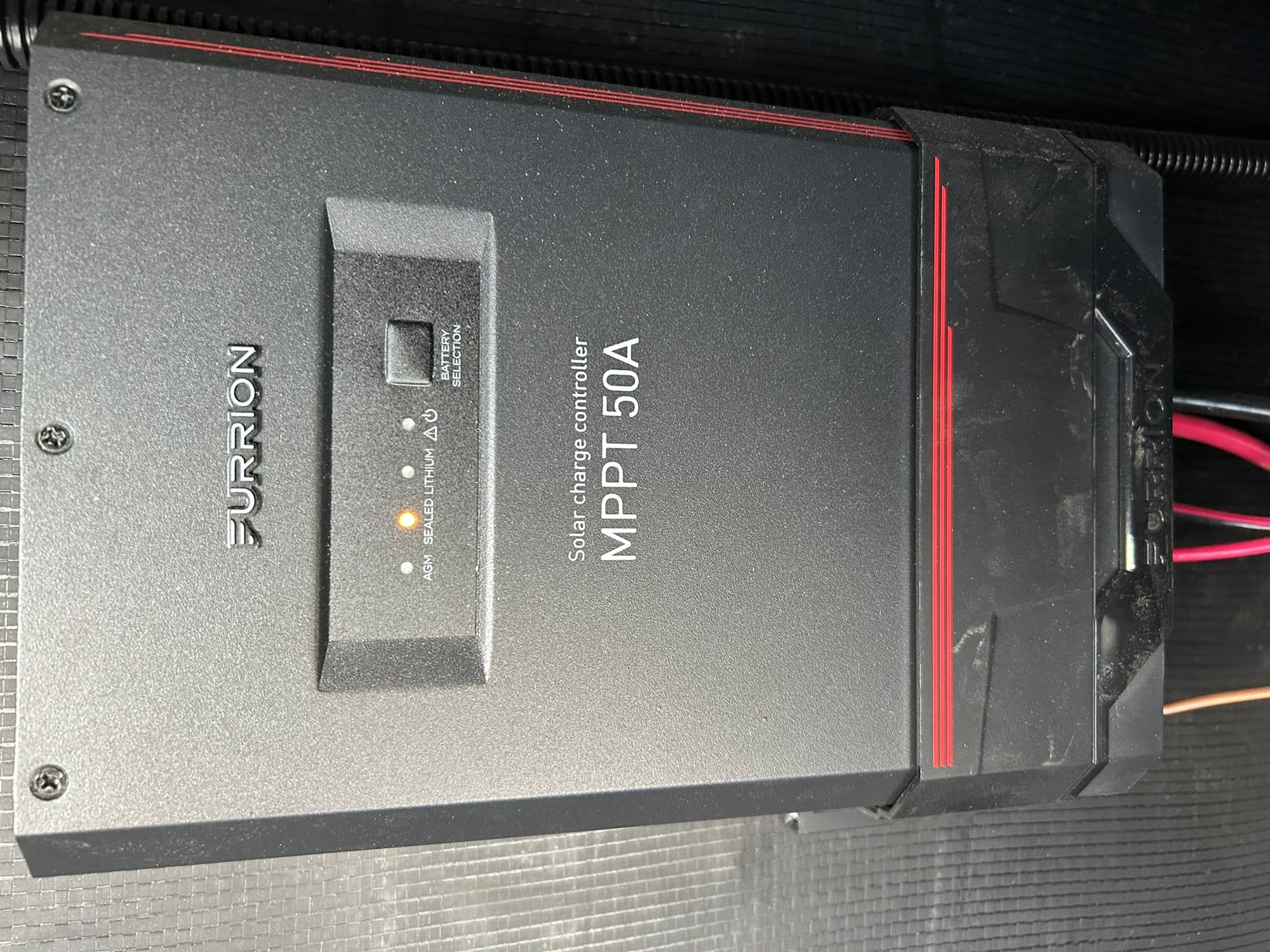
That leaves us with the need to recharge the batteries. We have an external generator we carry with us but don't want to have to set it up and run it all the time especially since many campgrounds have very limited hours for running generators. We are also looking at a moderately sized solar upgrade from our single 165W panel to 1000W (4 x 250W panels) to at least partially recharge our battery during the day stretching our battery power out another day or two and that should be plenty.
Finally, we are adding a DC-to-DC converter that will allow us to recharge our RV battery using our truck alternator. Because Lithium batteries absorb electricity much easier than lead-acid, you can't just run a pair of wires between the truck and RV. The lithium will literally suck everything your truck can provide and may damage your alternator. The DC-to-DC converter prevents this and provides the slightly higher voltage that Lithium batteries need to completely recharge.
We are also considering adding an inverter to our rig so we can run some 120V equipment in the RV but not big enough to run our A/Cs or several energy hungry devices at once. We are thinking of installing about 2000W of inverter that shares our one battery and will manage our use appropriately. If we find that one battery is not enough to handle the load we can always add another battery. Other people who boondock in the heat of summer would want a lot more battery storage and a much larger inverter to supply the power needs of multiple A/C systems! It's possible to add that style of system but it adds a ton of weight in batteries, solar panels and other electronics. If we need more 120V power I'll just fire up the generator!
We know a lot of people who want to head out into the wilderness and camp indefinitely and they go all out on a large solar and battery upgrades that can run up to $20,000 and more! Your desired style of camping will determine how much you’ll need to spend on upgrades to make it happen. My feeling is that I don’t want to over-spend on a system that I may never use or might use just once. That’s not fiscally smart to me but that’s based on our style of camping. There is no one right system for everyone, just some designs that meet your individual needs better! I suggest you analyze your style of camping, budget/finances and get a bunch of opinions before jumping into a design.